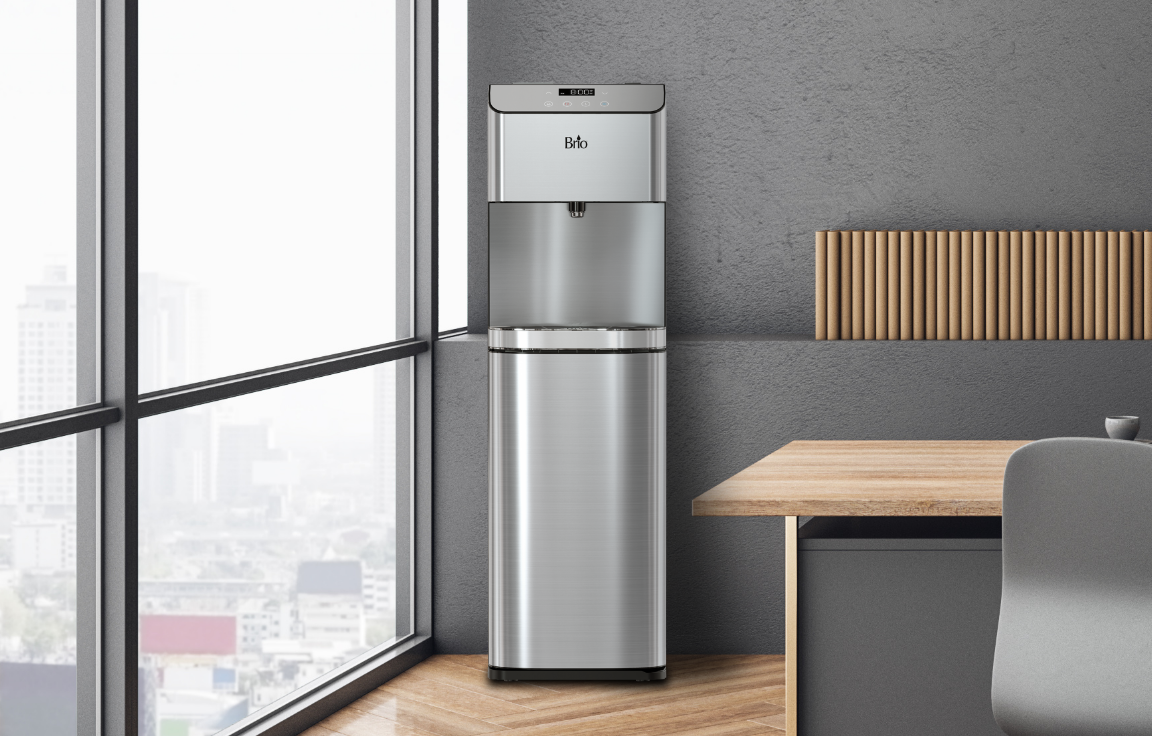
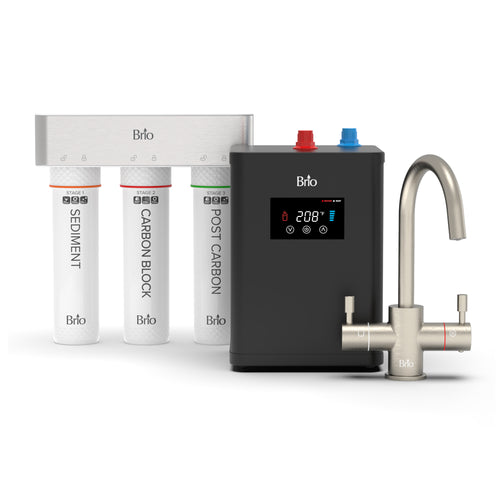
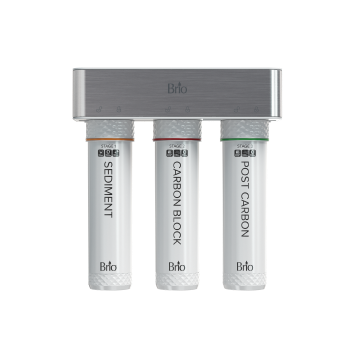
REMOVES CONTAMINANTS
Water can contain bacteria, chemicals, heavy metals, microplastics and PFAS—filtration helps remove them for safer drinking and cooking.
Chlorine and sulfur can impact water’s taste and smell—filtration improves flavor for a better drinking experience.
Filtration removes sediment and hard minerals, protects your plumbing, extends appliance life, and improves your everyday water.

No tank, no waiting—just clean water for drinking and cooking, filtered to remove up to 99.9% of harmful contaminants.


Enjoy cleaner water and near-boiling convenience
without waiting or extra appliances.


Reduce chlorine, odors, and impurities with easy under-sink filtration—no complexity, just better-tasting water.


From kitchen to bathroom, enjoy total filtration that enhances water, protects plumbing, and extends appliance life.


Reduce harsh hard water minerals and enjoy a softer,
healthier feel every day.

Brio redefines RO Filtration—reducing up to 99.9% of contaminants with sleek, space saving tankless systems and smart faucet technology.
Brio Whole House Solutions treat water at the source—combining filtration, softening, and UV protection to deliver clean, reliable water from every tap.
We've included a list of FAQs for a wide variety of categories.
The right water filter depends on your water source, its quality, and how you plan to use the filtered water. Do you have municipal tap water or a private well? Check your local water report or test your water to identify contaminants like chlorine, lead, PFAS, sediment, or hard minerals.
A pitcher or faucet-mounted filter may be enough to improve taste or odor, but more serious concerns call for a more advanced
system. Undersink reverse osmosis (RO) systems are popular for their broad range of contaminant removal. Whole house filtration systems are ideal for your entire home, including showers and laundry.
For renters, a refillable tank countertop water dispenser may be the best low-maintenance solution. Consider your space, water usage, and how much upkeep you’re comfortable with. The best filter is the one that fits your needs without
adding unnecessary complexity.
A whole house water filtration system is installed at the main water supply line, so every faucet and fixture in your home benefits. These systems can handle high flow rates and large volumes. They’re ideal for
households with multiple bathrooms and water-using appliances.
Brio Whole House Filtration Systems reduce sediment, chlorine, VOCs, and
other contaminants. Carbon filters improve taste, while other filtering stages target specific chemicals or minerals. Multi-stage designs combine different filtration methods to address a broad range of issues.
Whole house filtration systems don’t remove everything that a reverse
osmosis (RO) system can. However, they significantly improve water quality
throughout your home. You’ll enjoy cleaner clothing and dishes, as well as less
mineral buildup in your appliances—even your coffee maker. For ultra-purified water, pair a whole house system with the Brio Tankless RO Undersink Filtration System.
Reverse osmosis (RO) removes impurities by forcing water through a semipermeable membrane. With pores as small as 0.0001 microns, the membrane allows water molecules to pass through while blocking lead, arsenic, fluoride, chlorine byproducts, nitrates, and even microorganisms like bacteria, parasites, and viruses.
RO systems typically include pre-filters and post-filters to remove
larger particles, reduce chlorine, and improve taste. The result is clean,
crisp-tasting water ideal for drinking and cooking.
One of the advantages of an RO system is its ability to remove dissolved solids that many other filters miss. It’s especially helpful if your water contains high levels of impurities or comes from a questionable source. While RO systems produce wastewater, modern designs are far more efficient. RO is a smart, long-term solution for advanced water purification at home or in the workplace.
Ultraviolet (UV) water disinfection uses a specialized lamp to eliminate potentially harmful microbes, including E. coli, Giardia, Cryptosporidium,
and Salmonella. The UV light damages the DNA of these microorganisms so they can’t reproduce or
cause illness.
UV systems don’t add chemicals or alter your water. They simply target biological contaminants, which makes them especially useful for homes that rely on well water or are affected by seasonal flooding or boil-water advisories.
Although UV systems don’t remove physical particles or chemicals like chlorine or PFAS, they’re highly effective when used as part of other filtration methods. Pairing UV with a multi-stage filtration system gives you broad-spectrum protection and peace of mind, especially when water quality is inconsistent or unpredictable.
PFAS (per- and polyfluoroalkyl substances) are synthetic chemicals used in products like nonstick cookware, waterproof fabrics, and food packaging. There are thousands of different types of PFAS, and they have been detected in soil, air, water, and even in human blood.
They’re called “forever chemicals” because they don’t break down easily. Long-term PFAS exposure has been linked to health risks, including thyroid problems
and cancer.
A high-quality water filtration system can reduce PFAS levels in your water. Reverse osmosis (RO) filters are generally considered the most effective option. Brio offers a range of reverse osmosis systems that provide advanced protection from PFAS and other contaminants.
Flow rate is the volume of water that passes through a filter in a given time, stated in liters per minute (LPM or L/min), gallons per minute (GPM), or gallons per day (GPD). It affects how quickly you can access filtered water and how effectively the system meets your household’s daily needs.
A higher flow rate means faster fill-ups, whether you’re filling a glass, pitcher, or cooking pot. For example, Brio systems with a 400 GPD capacity offer a steady flow rate of 1 L/min, while 600 GPD models deliver 1.5 L/min.
Need more speed? An 800 GPD system provides up to 2 L/min. That can make a real difference in busy kitchens, shared homes, or office settings where quick access to clean water matters.
Tankless reverse osmosis (RO) systems filter water on demand, eliminating the need for a storage tank. The tankless design provides a steady flow of freshly filtered water with less water waste. It also reduces the risk of stagnant water. Many tankless systems have lower pure-to-drain ratios compared to traditional
systems.
Pure-to-waste ratio indicates the proportion of filtered water produced versus the amount discarded. A 1:2 ratio means one cup of clean water for every two cups wasted.
Your browser is out of date, and may not be compatible with our website.
You can update your browser from the link below.
Download the latest version of your prefered browser